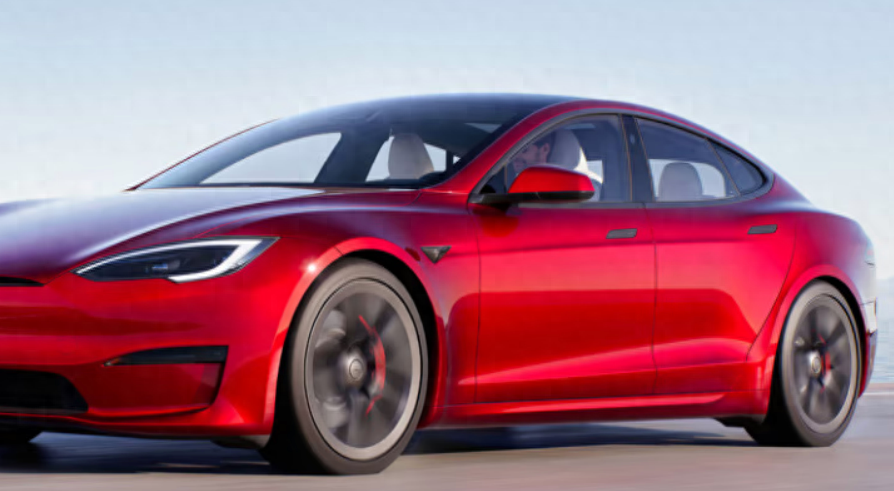
Talking about electric car sales feels different now. It's not a distant future prediction anymore. I've spent the last few months digging into reports from the International Energy Agency (IEA), parsing quarterly earnings calls from automakers, and honestly, just talking to people at charging stations. The story that emerges isn't just about environmentalism or government mandates. It's a messy, competitive, and incredibly fast-moving shift driven by a few concrete things that finally make sense to the average buyer. The tipping point isn't coming; for many, it's already here.
What You'll Discover in This Guide
Beyond the Headline Numbers
Everyone cites the global growth figures. They're impressive. But zoom in, and the picture gets more interesting. Sales aren't uniform. In places like Norway, where the infrastructure and incentives aligned early, EVs dominate. In other major markets, growth is lumpy, heavily dependent on the specific models available that quarter.
I was looking at the data from BloombergNEF recently. One chart stuck with me: the price parity curve. For years, the high upfront cost of an EV was the biggest barrier. That wall is crumbling, not everywhere at once, but in key segments. When a popular SUV's electric version costs roughly the same as its gas counterpart over five years of ownership, the conversation changes completely. People start comparing features, not just the powertrain.
The shift I'm seeing: The early adopters bought for ideology or performance. The next wave, the one driving sales now, is buying on practical math. They're comparing monthly payments, fuel savings, and maintenance costs. It's a more boring reason, but it's a much more powerful and sustainable one.
The Three Real Drivers Nobody Talks About
Forget the vague "green wave" narrative. When you talk to actual buyers and dealers, three specific factors keep coming up.
1. The Lease and Subscription Revolution
This is huge, and most analysts undersell it. Battery technology is improving fast, which is great, but it also makes people nervous about owning a rapidly depreciating asset. Enter flexible leases and all-inclusive subscriptions. Companies are bundling the car, insurance, maintenance, and even charging credits into one predictable monthly fee. It removes the anxiety about long-term battery health and future resale value. For the buyer, it turns a big capital decision into an operating expense. For sales, it's a lubricant.
2. The "Good Enough" Range Breakthrough
The race for 500+ miles of range gets headlines. But in my view, the real sales catalyst has been the proliferation of models offering a "good enough" range of 250-300 miles. This covers the vast majority of weekly driving for most households. Combined with the rapid (though still uneven) expansion of fast-charging networks, it has effectively solved range anxiety for city and suburban drivers. The focus is shifting from maximum range to charging speed and convenience.
3. The Second-Hand Market Finally Appears
A healthy market needs an exit door. For years, the used EV market was tiny and scary. That's changing. A flood of off-lease vehicles from the early 2020s is now hitting dealerships. These are cars with proven battery reliability (the degradation fears were often overblown) at half their original price. This opens up EV ownership to a whole new budget-conscious demographic. It validates the technology and creates a crucial funnel for new sales.
How to Evaluate an EV Like a Pro
If you're thinking about buying, the checklist has evolved. Don't just look at the sticker price and range.
Look up the real-world charging curve, not just peak speed. A car might advertise 250kW fast charging, but can it sustain that? Many taper power dramatically after 50% battery. Reviews from sites like InsideEVs that show time-to-charge graphs are more useful than the spec sheet.
Map your actual fast-charging options. Don't trust the manufacturer's map. Use the PlugShare app. See what networks (Electrify America, EVgo, ChargePoint) are actually available and reliable on your regular routes. I've been stranded once relying on a single brand-new station that was malfunctioning. Never again.
Calculate Total Cost of Ownership (TCO) for *your* situation. Generic calculators are okay, but plug in your local electricity rate (look at time-of-use plans!), your actual annual mileage, and your local gas price. Factor in things like reduced brake maintenance. The result can be surprising.
| Evaluation Factor | Old Way of Thinking | Pro Way of Thinking |
|---|---|---|
| Key Metric | Maximum Range (miles) | Charging Speed (10-80% time) & Home Charging Setup |
| Cost Analysis | Sticker Price vs. Gas Car | 5-Year TCO, Including Insurance & Depreciation |
| Technology Focus | Battery Size (kWh) | Software Update History & Battery Thermal Management |
| Test Drive Focus | Acceleration & Quiet Ride | Regenerative Braking Adjustability & Infotainment Usability |
The Hidden Hurdles Still Slowing Adoption
It's not all smooth sailing. To understand the sales trajectory, you have to see the friction points.
Insurance costs are becoming a nasty surprise. Repair complexity and parts scarcity for EVs are driving insurance premiums through the roof, sometimes double that of a comparable gas car. This erodes the fuel savings and is a quiet headwind for sales that nobody saw coming a few years ago.
The public charging experience is still a lottery. Even with more stations, reliability is patchy. Payment systems are fragmented. For anyone without a dedicated home charger (apartment dwellers, city residents), this remains the single biggest practical barrier. Sales growth in dense urban areas lags for this exact reason.
Dealerships can be the worst enemy. I've heard this from multiple sources. Traditional dealerships make less money on maintenance for EVs. Some sales staff are poorly trained or even actively discourage EV purchases to move their gas-powered inventory. The direct-to-consumer model, like Tesla's, avoids this, but it's a real drag in the traditional franchise system.
Investment Angles Beyond Tesla
If you're looking at this as an investment theme, the landscape has widened dramatically. It's no longer a one-stock story.
The pure-play EV makers are high-risk, high-reward. The established automakers are in a brutal transition—some will navigate it well, others will burn cash for years. But the more interesting plays, in my opinion, are in the enabling layers.
- Charging Infrastructure & Utilities: Companies building and operating charging networks, or those making smart grid technology to handle the load. The U.S. Department of Energy funding is pouring into this space.
- Battery Materials & Recycling: The scramble for lithium, cobalt, and nickel is well-known. The next phase is about efficient, localized recycling to secure the supply chain. That's a less crowded but critical niche.
- Specialized Components: Think silicon carbide semiconductors for efficient power management, or advanced thermal management systems. These are the picks and shovels for the industry.
The mistake is thinking the winner-takes-all dynamic from the smartphone era applies here. The automotive ecosystem is too complex, with too many regional variations. A diversified approach across the value chain might be wiser than betting on a single brand.
Your Burning Questions Answered
The electric car sales story is moving from the theoretical to the practical. It's less about saving the planet in one grand gesture and more about individuals making rational choices that happen to align with a broader trend. The numbers will keep growing not because of hype, but because for more people in more situations, the math finally works, and the convenience is finally there. The road ahead is being paved one home charger, one reliable fast-charging stop, and one sensible lease deal at a time.